

Tracy G with DIO - Strange Highways
Live in London Hammersmith Apollo, 1993
A screenshot from original live video, digitally enhanced.
Part 1 — Behind the Iron Curtain
I told this story briefly to Tracy G when we met at his studio, so I’ll kick it off from there. Growing up, my childhood and teenage years unfolded in the closed city of Nikolaev, Ukraine, back when it was still part of the USSR. Let me paint the picture for you—this wasn’t just some industrial town. It was a major military hub, partially top-secret. We had massive shipyards cranking out everything from fishing schooners and oil tankers to full-on submarines and aircraft carriers.
The city was surrounded by military bases, testing grounds for some seriously strange aircraft, often at night. Over at the South Turbine Plant, they were building engines for planes and military boats. My dad ran the show as the chief engineer at the second-largest alumina plant in Europe. Alumina—you know, the stuff that turns into aluminum, the backbone of airplanes. The city had a dozen of these big, strategically important factories. Foreigners getting in? Practically impossible. Yeah… I know “Iron Curtain” isn’t just a metaphor.
In a place like that, Western pop and rock were basically contraband. We had blacklists of forbidden bands. But I got lucky. My older sister had friends who were die-hard music nerds, and by the time I was seven, I had my first forbidden tape—Pink Floyd, spinning on a reel-to-reel. On top of that, my dad tuned in to music shows on Voice of America and BBC Radio.
I guess it’s hard for folks in the States to grasp how music could actually be banned. But that was the harsh reality of the USSR. A regular Soviet citizen wasn’t supposed to rock out to bands sporting Nazi symbols (AC/DC) or dabble in Satanic Sabbath. Religious views? Not exactly welcomed either. But those slogans, those symbols—they were off-limits, period. And forget about freedom-loving punks, flower kids, sex, drugs, and rebellion… NO. Not for a Soviet kid.
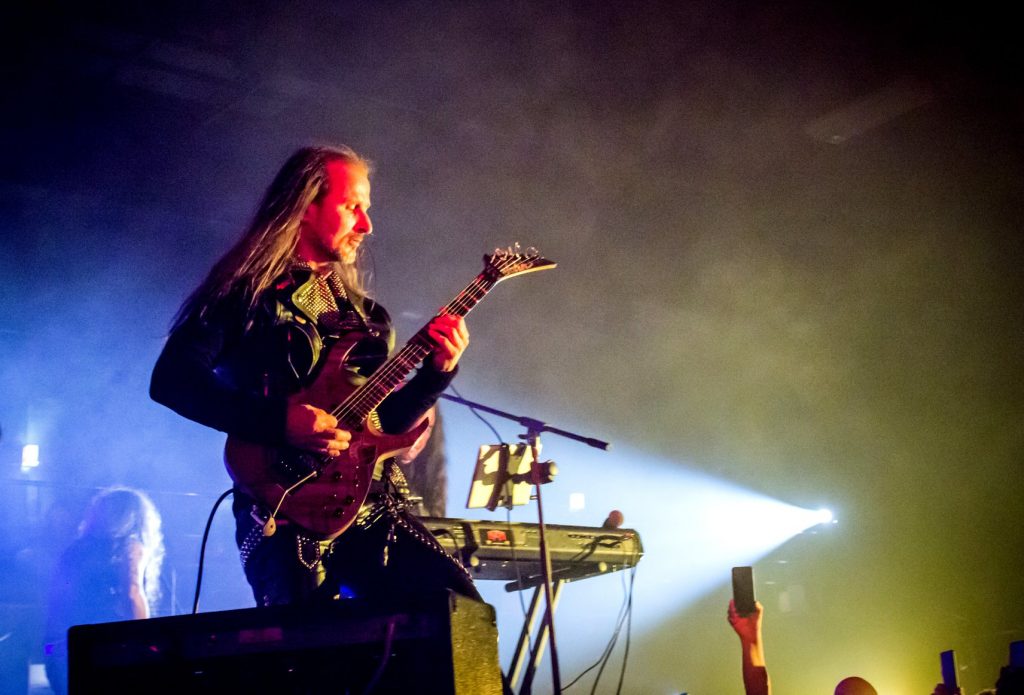
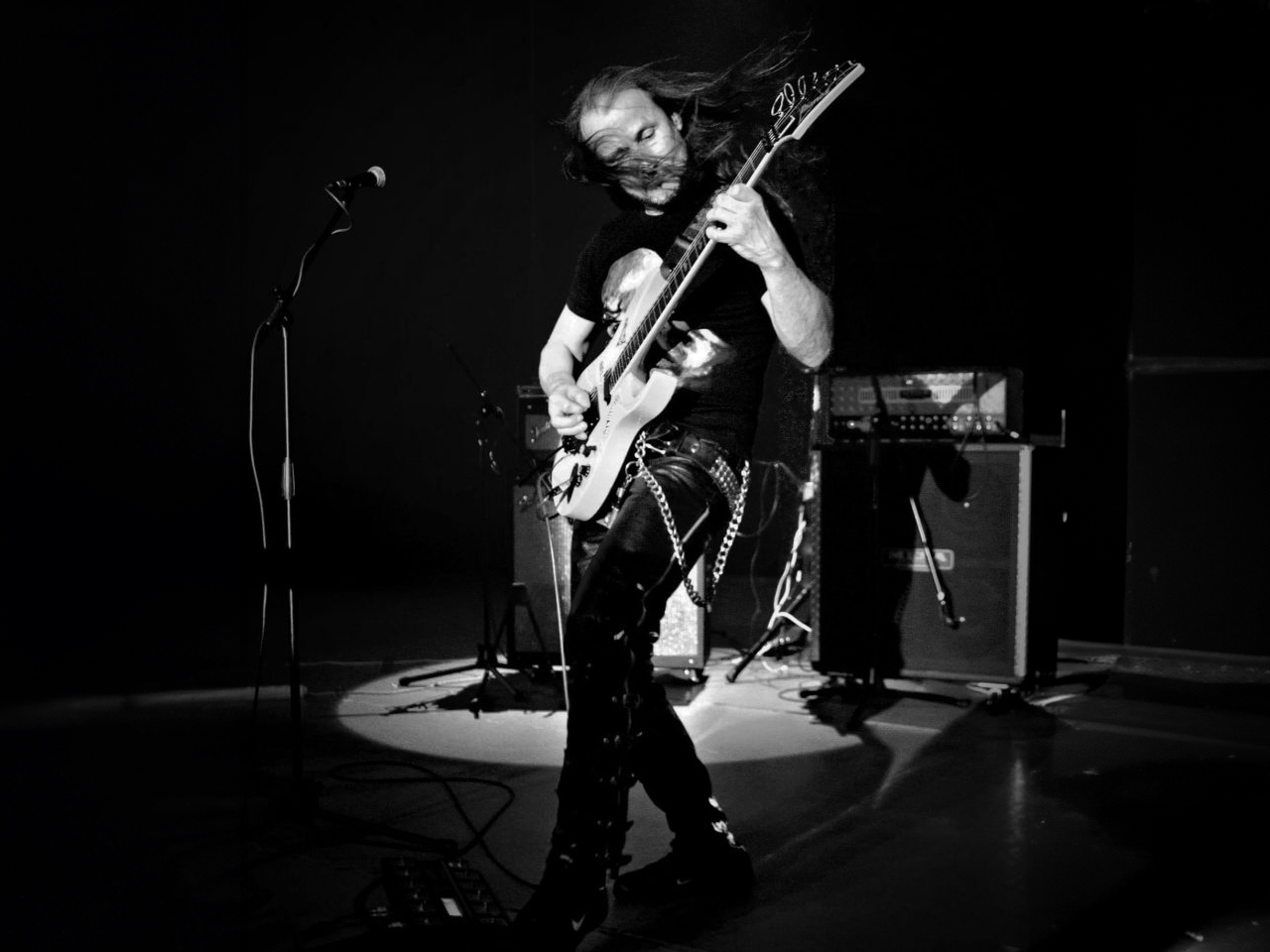
John Ivan GuitarSlinger Live
Photo courtesy of John Ivan
Part 2 — From the Windsurf Board to the First Forbidden Tapes
I picked up the guitar when I was ten and went straight to music school. A year later, though, something wild happened — a new sports club opened in my hometown: Windsurfing. And, man, that was it for me. Even though I’d nailed my exams that year — actually passed the third-year guitar test after just one year of study (thanks to my brilliant teacher) — I jumped ship for the yacht club.
Of course, there was another reason behind it. I wanted to play Pink Floyd or maybe Mashina Vremeni — that’s this Soviet-era rock band we all loved — but instead, I had to play “Eight Variations on a Folk Song” or etudes by Matteo Carcassi. Yeah, not exactly Comfortably Numb.
Anyway, windsurfing took over my world for a while. I started winning local and regional competitions, and soon enough, even my first national-level regattas. They began flying us all over the USSR to race. Both of our coaches were hardcore music freaks, total vinyl junkies. We’d spend nights at their places, listening to that magical crackle of records they’d somehow scored for insane money from who-knows-where — Deep Purple, ELO, Rainbow... pure gold.
By that time, I’d made it to the top — I was the #1 sailor on the Ukrainian team, and my future bandmate and drummer, Nick, was my backup. We traveled a lot to regattas in Crimea, especially to Sevastopol — another closed military city with ports, harbors, subs, cruisers, and all that Cold War hardware. But Sevastopol being a major port had its perks: sailors brought in smuggled gear and fresh records from abroad.
That’s where Nick and I discovered this little studio that copied vinyl records onto cassette tapes. You could bring your own blank cassette, pay three to five rubles, and they’d record something new — usually something completely unknown to the Soviet ear.
And that’s where it happened. The day my life flipped upside down.
I picked two albums: Dio – 1985 and Metallica – 1986. Out of a long list of forbidden stuff, those names just jumped out. We’d read about them in these underground magazines — “samizdat” zines that were passed hand-to-hand, worn down to rags.
From that moment on, Ronnie James Dio became my all-time favorite vocalist. And Metallica? They defined exactly what kind of music I wanted to make with Nick in our band BESTIA — hard-hitting guitar-driven stuff with killer riffs, tricky time signatures, and melodic shred solos.
And that’s when I made a silent promise to myself: One day, I’ll live in Los Angeles. Because in my mind, LA wasn’t just a city — it was the holy land, the beating heart that fueled all those musicians who inspired me.
You know what? I still believe that today.

DIO - Strange Highways
Part 3 — Strange Highways and a Promise Fulfilled
Fast-forward a few years — it’s 1993. By then, a lot had changed, but one day I got my hands on an original Vertigo Records cassette of DIO’s brand-new album, Strange Highways.
That tape hit me like a sledgehammer. It kicked off a whole new chapter of my obsession with DIO. There was a new guitarist in the band — and whoever that guy was, he had this tone, this thing — a thick, syrupy heaviness, endless sustain, screaming harmonics, twisted runs, and those otherworldly noises that just didn’t make sense to me back then. I had no clue how he was pulling those sounds off. But damn… it was super cool.
That was Tracy G.
And right then and there, I made another promise to myself: Someday, I’m not just moving to Los Angeles — I’m gonna meet that guy and shake his hand. Because from that day forward, Tracy G became another one of my musical heroes.
Years rolled by. I’d already been to LA several times — my dream city — and every trip made me realize this was my true “place of power.” Eventually, the internet came along, then Facebook, and the world suddenly felt smaller.
I can’t even remember if it was Tracy himself who showed up first on my friends list or the vocalist he worked with on the metal project Pain Savior — Elvin Rodriguez. They did an album called Dead Weight on a Dying Planet (2013), plus a few demos. I ended up recording a few songs with Elvin too — he even appears on my solo album GuitarSlinger in the track John Ivan feat. Elvin Rodriguez – The Last Loaded Brain-Storming.
I think we actually cut a couple of tracks together way back in 2007 or maybe 2009 — not 100% sure now. But either way, that connection with Elvin somehow pulled me closer to Tracy’s orbit.
And then one day, here I am — living in LA, or more precisely, just a little south down the 5 Freeway toward the ocean. Scrolling through my feed, I see Tracy’s posting about recording another album, and this little voice in my head goes, “Dude, why the hell haven’t you met him yet? He literally lives around here somewhere!”
So I hit him up — reopened an old thread from years ago — and he instantly replies, super chill: “Hey man, let’s just talk on the phone.”
From that first call, Tracy came across as this genuinely warm, down-to-earth dude. We vibed right away and decided to meet up at his G Factory Studio. Bingo.
I was finally driving to meet the guitarist who recorded what I still think is the heaviest, most badass album of my favorite band — the same DIO that was once banned back in the USSR!
And you know what? Tracy turned out to be one of the kindest, most humble people I’ve ever met — despite being the guitarist of DIO. I kinda knew from the start that I’d like him not just as a player but as a person.
So here I am, 32 years after I first held that Strange Highways cassette, standing on the lawn outside Tracy’s home and studio, just chatting. Talking about everything — life, music, DIO, touring, gear, guitars — and it’s like we’re totally on the same wavelength.
It’s surreal, man.
Part 4 — Full Circle: From a Soviet Kid to the G Factory Studio
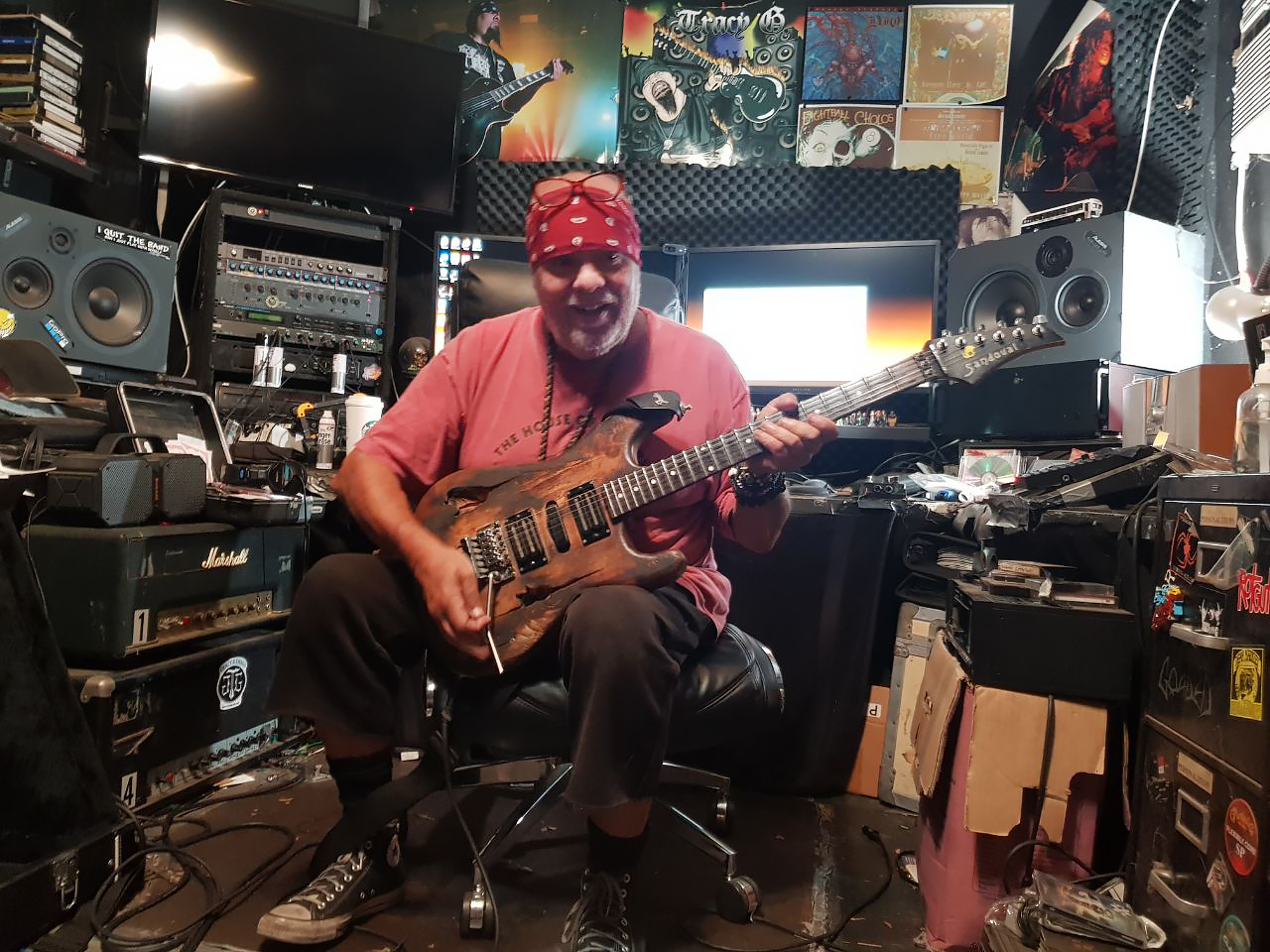
Tracy G in his G Factory Studio
Photo by John Ivan GuitarSlinger
John Ivan: Right from the start, I told Tracy I’d be recording a bit of our talk on my phone — just to send it to my buddy Eugene, who’s the editor-in-chief of Suley Era music magazine. “Maybe we’ll shape it into a kind of interview,” I said, though really, it was just two guitar freaks geeking out over tone and life.
Tracy just laughed and said, “Sure, man. No problem at all.”
Once we got going, I realized I didn’t even need to ask questions. Tracy had so many stories, and they were exactly what I’d always wanted to hear — the inside scoop from someone who lived and breathed the same music I grew up worshipping. Two guitar players talking about the same passion — touring, recording, chasing tone — it just flowed naturally.
Of course, one of my first questions had to be about those sounds — the signature tones that became his trademark back in the DIO days. And Tracy, being the awesome guy he is, broke it all down for me. Here’s the crazy part — he still plays that same guitar, through that same Randall amp, using that same pedalboard with all those old 80s stompboxes — the ones you probably can’t even find anymore. That’s the same setup he used with DIO, and later in all his other projects. Man, hearing that tone again up close was pure heaven for me.
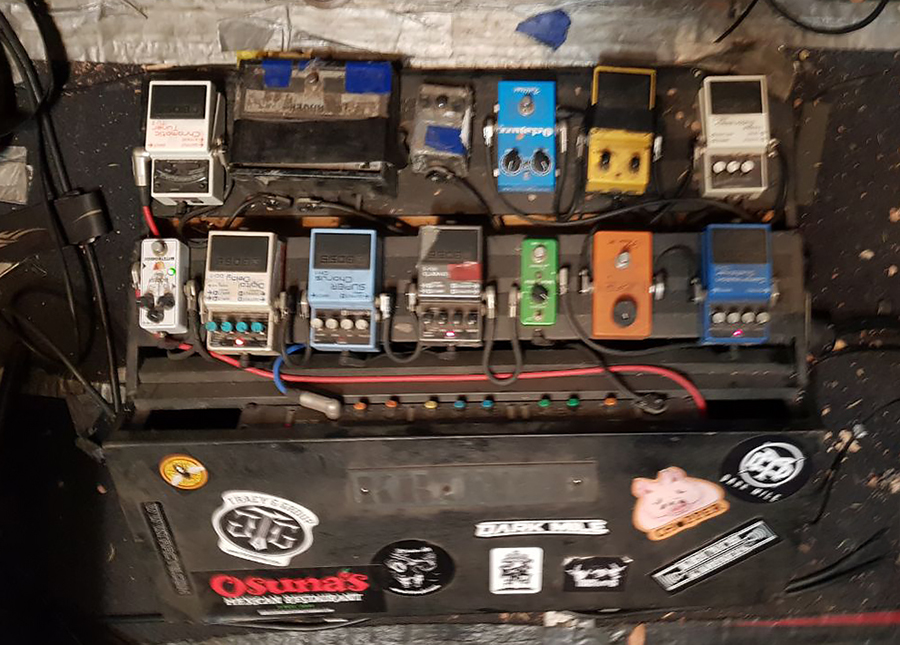
Tracy G's Famous Pedalboard
Photo by John Ivan GuitarSlinger
As a guitarist and lifelong fan — someone who literally still has the ’93 and ’95 DIO albums stuck on an old phone — this was just next-level.
Tracy shared stories and details I’d never heard anywhere else — about sessions, riffs, working with different musicians… total gold. Unfortunately, both of my phones filled up mid-conversation — typical, right? — so I had to start deleting stuff on the fly just to make room for more recordings. But I managed to send everything to Eugene, and he sorted it all out later.
If you’re a guitarist or a DIO fan — hell, if you just love good, honest music made by real musicians — you need to watch those videos. The day ended with me sitting in LA traffic for two or three hours, heading back toward the ocean, totally fired up and just… happy.
Hard to even describe that feeling — it was so personal. I mean, come on — how often do you get to meet one of your heroes and find out he’s even cooler in real life?
I brought Tracy a copy of my own CD as a small gift — just to show him that some kid from Ukraine had been listening to his music for decades, and that it genuinely shaped my life. I wanted to thank him for the inspiration. Sure, we play very different styles, but I like to think he might’ve heard echoes of his own influence somewhere in my tracks — maybe in my approach to tone, always chasing that massive, heavy-as-hell sound from the amp, always searching for your own unique voice.
But Tracy’s a legend, man — a total titan. And here’s where it got crazy — he disappears for a minute and comes back with this big box full of his albums and merch.
He goes, “All this is for you, bro.”
I’m like, “Whoa, man, I can’t take all that!”
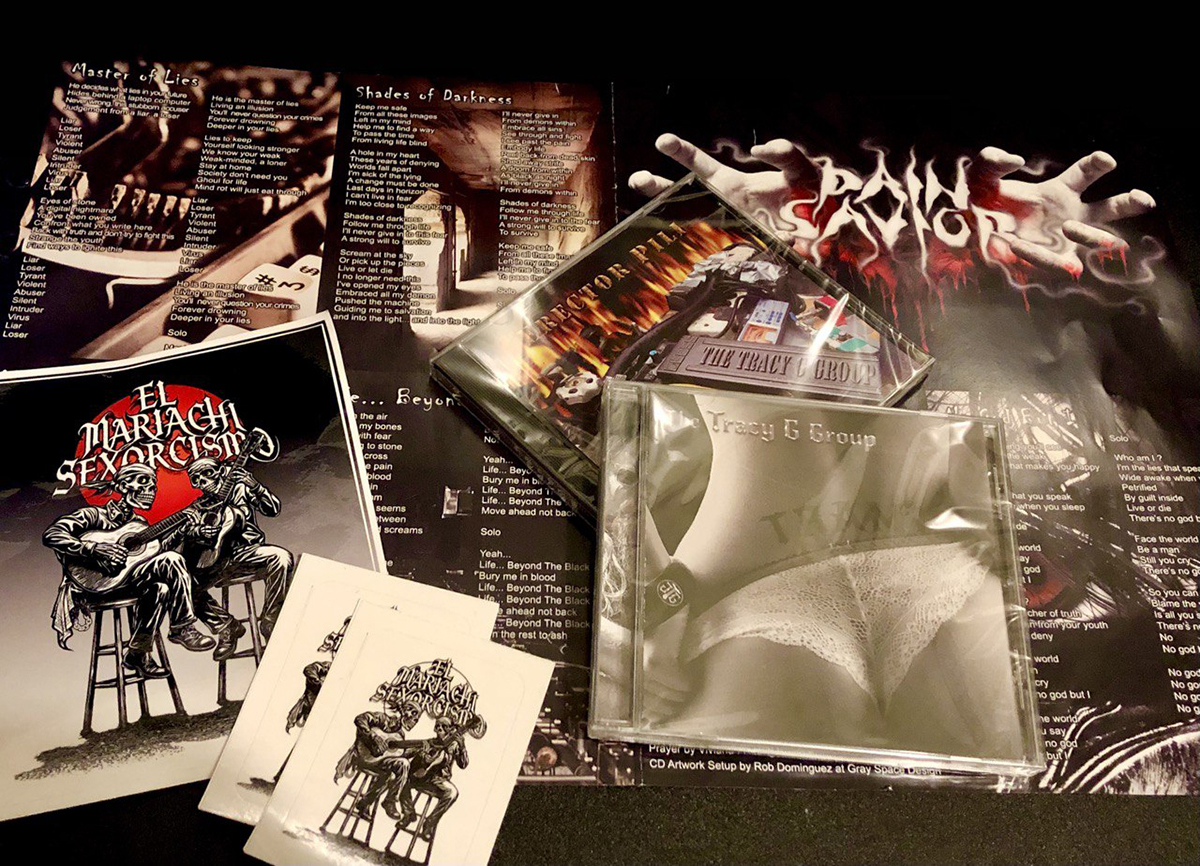
Tracy G Posters & Albums
Photo by John Ivan GuitarSlinger
So I just picked a few albums I didn’t even know existed — and they turned out to be absolutely killer.
When I drove back from Vegas, and my buddy Hal and I blasted one of them both ways — The Tracy G Group – Erector Pili (2005).
That record… it just slams. Heavy, fresh, inventive — like DIO meets Pantera with this extra layer of something deep and haunting. I kept thinking, if Ronnie had kept working with Tracy, that could’ve been the ultimate DIO album of all time. When we were hanging at the studio, Tracy also played me a few cuts from his upcoming record. Totally different music — super cool stuff. I honestly have no idea where he pulls it all from, but I was blown away.
Meeting such a unique, creative, humble dude — a real-deal musician — that’s something I’ll never forget.
And let me tell you one last thing: keep your eyes open, because I’ve got more stories coming your way soon — about Tracy and some very interesting new projects he’s working on.
Watch the entire conversation with Tracy G at his G Factory Studio
The Tone of Metal Guitar: Tracy G Story with John Ivan GuitarSlinger
BONUS VIDEO
Tracy G reveals his secret ingredients of his distinctively unique guitar sound and gives a short demo of his famous pedalboard.
Special thank you to Randy Oviedo (Bass, Streek) for making this video.
The Tone of Metal Guitar: Tracy G Guitar FX Demo
Stay tuned. Stay Metal.
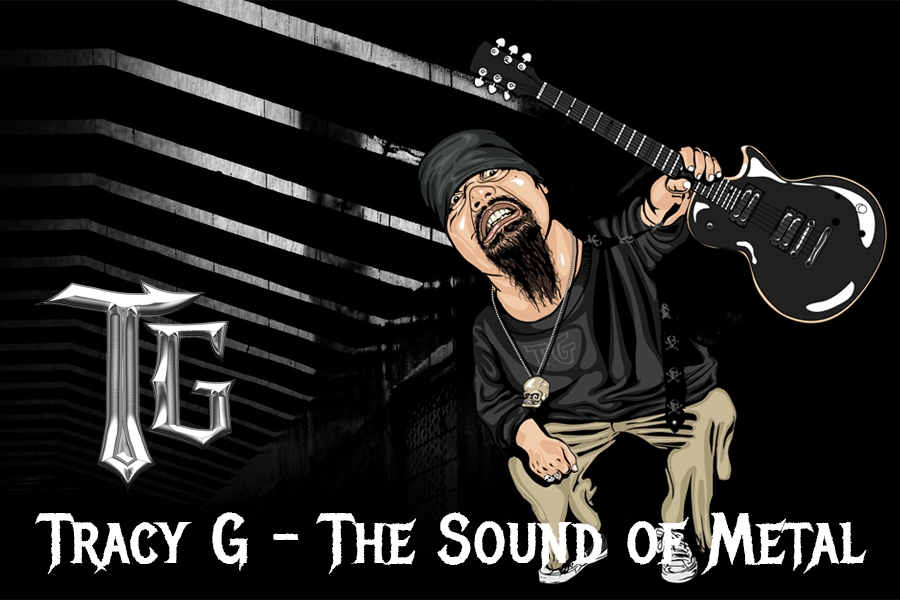
ABOUT Tracy G
Tracy G is an American guitarist best known for his groundbreaking tenure with Ronnie James Dio in the mid-1990s, contributing to the albums Strange Highways (1993), Angry Machines (1996), and the live release Inferno: Last in Live (1998). His aggressive, unorthodox approach to tone and phrasing helped define Dio’s darker, heavier sound during that era. Before joining Dio, Tracy G built a reputation in the Southern California scene through projects like Swift Kick and Rags, where his hybrid of technical precision and street-hardened grit began taking shape. His guitar voice—rooted in rock, blues, and experimental effects—remains instantly recognizable.
Tracy G says about his guitars: “When you go into battle, your weapons are your tools for fighting. If you’re a dentist, your tools are what you use to pull out teeth. For a musician, the instruments are just there for you to express yourself. Guitars, instruments, they’re like swords that you use to communicate with. If they get scratched or I spill some beer on them, or I sweat on them, SO WHAT! As long as they sound and play right, I can say what I want to say with them. To each his own…”
Tracy also made a significant mark as the guitarist for WWIII, the metal powerhouse formed by bassist/vocalist Mandy Lion. In WWIII, he embraced a heavier, more industrial-tinged edge, pushing his playing into brutal, high-impact territory that caught industry attention. Throughout his career, he continued evolving with bands and projects such as Driven, Goad-ed, Pain Savior, and Dark Mile, further showcasing his commitment to reinvention. Whether crafting intricate atmospheres or unleashing razor-sharp riffs, Tracy G stands as a guitarist whose sound, spirit, and creative fearlessness have shaped decades of American heavy music.
Tracy G Selected Works:


Follow Tracy G